Physiotherapy · Lower Back · Exercise
Lower Back Pain ExplainedCauses, Exercise, Sciatica & Physiotherapy in Singapore
Lower back pain after sitting all day? A sharp pain when you bend forward? Or an ache that keeps returning every time you go back to the gym?
Lower back pain is extremely common. While it can feel alarming, having back pain does not automatically mean that something in your spine is seriously damaged.
Many episodes can be managed without surgery or extensive investigations. At NXS Collective in Clarke Quay, Singapore, our approach is to understand how your symptoms behave, what your back is currently struggling to tolerate and what needs to improve for you to return to normal activity with confidence.
Understanding symptoms
What causes lower back pain?
One of the frustrating things about back pain is that there is not always one structure that can be identified as “the problem”. Your lower back contains muscles, joints, ligaments, discs, nerves and other structures that can contribute to symptoms.
Sometimes there is a clearer diagnosis, such as irritation of a nerve root producing sciatica. However, a large proportion is classified as non-specific low back pain, meaning the symptoms cannot reliably be attributed to one specific structure.
That does not mean your pain is not real. It means finding the exact tissue responsible is not always necessary for successful treatment. How symptoms behave, which movements provoke them and what changed before they started can often be more useful.
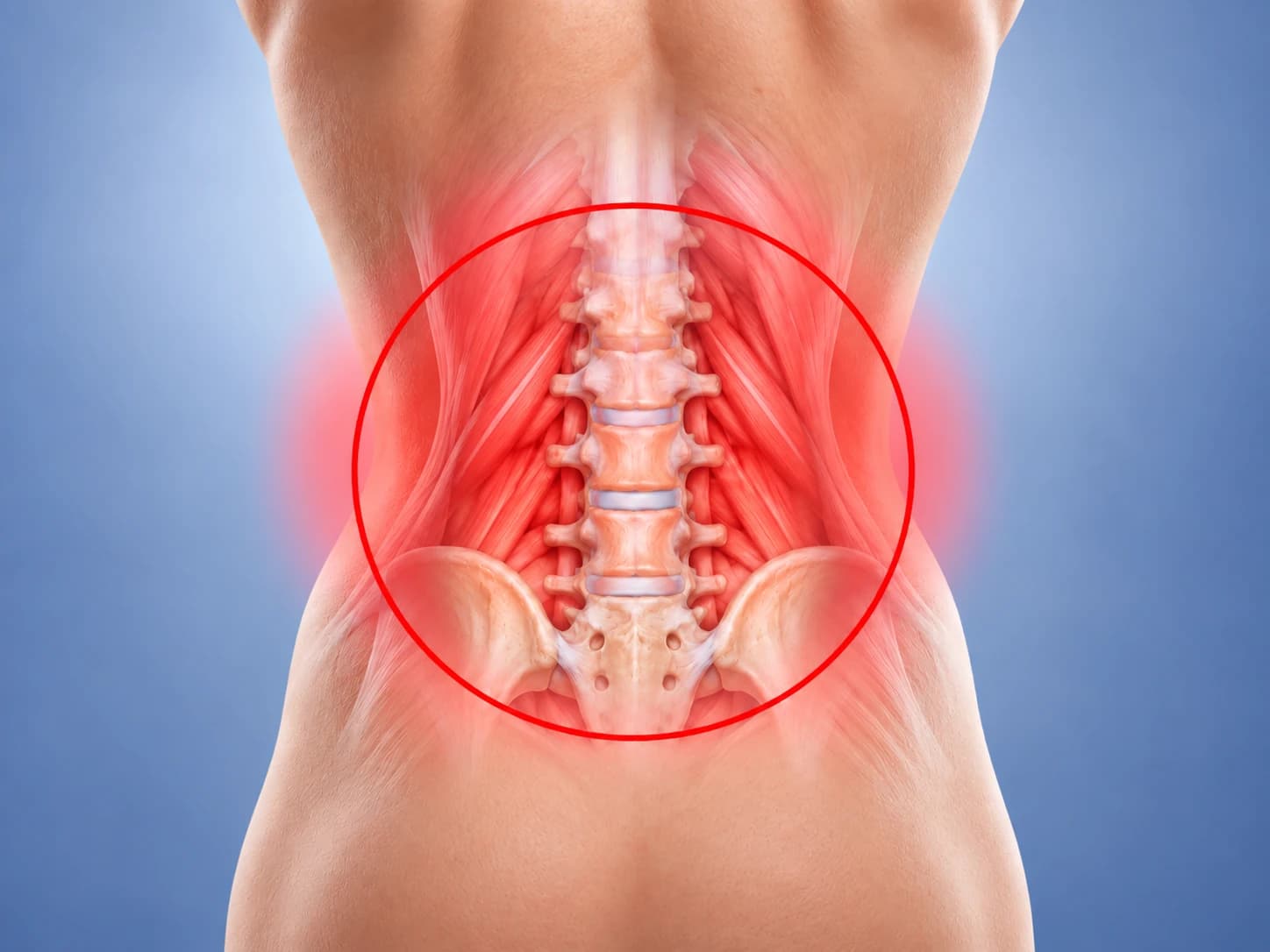
Why did my back suddenly start hurting?
Sometimes there is an obvious trigger. You might have:
- Lifting something heavy
- Increasing your gym training
- Performing an unfamiliar exercise
- Spending much longer sitting than usual
- Playing more sport
- Travelling for hours in a plane or car
- Repeatedly bending or lifting at work
Sometimes there is no dramatic event at all. Back pain can be influenced by physical loading, activity levels, previous pain, sleep, stress and other individual factors.
Instead of only asking “What did I damage?”, it can be more useful to ask “What changed recently, and what is my back struggling to tolerate?”
Movement & activity
Does sitting cause lower back pain?
Many people become uncomfortable after sitting for prolonged periods, particularly during long desk-based workdays. This does not necessarily mean sitting is damaging your spine, and there is no single perfect posture that guarantees you will never experience back pain.
Changing positions, getting up periodically and incorporating more movement throughout the day can be useful. For some people, the bigger issue is not necessarily how they sit, but how long they stay in one position.
Should I rest if I have lower back pain?
Usually, prolonged rest is not the answer. Temporarily modifying activities that significantly aggravate symptoms can be sensible, but that is very different from avoiding movement altogether.
Major clinical guidelines encourage people with lower back pain to continue normal activities where possible and use exercise and self-management as part of recovery.
The unhelpful cycle
Pain → stop everything → wait until pain completely disappears
A progressive approach
Pain → modify activity → keep moving → rebuild capacity
Building capacity
Should I exercise with lower back pain?
In many cases, yes. Exercise is one of the most consistently recommended treatments for persistent lower back pain. Clinical guidance supports a range of approaches:
- General strengthening
- Trunk strengthening and endurance exercises
- Aerobic exercise
- Movement-control exercises
- Mobility exercises
- Aquatic exercise
- Multimodal exercise programmes
A large Cochrane review concluded that exercise probably reduces pain in people with chronic lower back pain compared with no treatment, usual care or placebo. There does not appear to be one universally superior exercise for everyone.
The best programme is appropriate for your current symptoms, progressively challenges your capacity and helps you return to the activities you want to do.
Do I need to strengthen my core?
Possibly — but your core is not the whole story. The idea that back pain simply means you have a “weak core” is an oversimplification. Trunk exercises can be useful, but so can general exercise, aerobic work and progressive physical activity.
- Hip and leg strengthening
- Improving tolerance to bending and lifting
- Cardiovascular exercise
- Progressive return to running or sport
- Gradual exposure to activities that currently provoke symptoms
Someone returning to deadlifting needs a different programme from someone whose main goal is to sit comfortably through a workday. We do not simply want to make your core stronger. We want to make you more capable of doing the things that matter to you.
Movement confidence
Is bending bad for your back?
It is common to become worried about bending forward, particularly if it is currently painful. But bending is a normal movement used to pick something up, tie your shoes, sit, exercise and play many sports.
During an acute episode, certain movements may need temporary modification. For many people, however, the longer-term goal is not permanent avoidance. It is to gradually restore confidence and capacity in the movements they need.
What about lifting with a rounded back?
You may have heard “never lift with your back” or “keep your spine perfectly neutral”. In reality, lifting is more nuanced. Technique affects how forces are distributed and changing it may make a painful movement more comfortable, but avoiding movement indefinitely is generally not the goal.
We may temporarily modify a lifting strategy, then progressively reintroduce load and movement as tolerance improves. The goal is not to make someone afraid of their spine. It is to develop a back capable of handling the demands placed on it.
Nerve symptoms
Is lower back pain the same as sciatica?
No. Sciatica generally describes leg symptoms associated with irritation or compression of a spinal nerve root contributing to the sciatic nerve. Symptoms can travel from the lower back or buttock into the leg.
- Shooting or burning leg pain
- Pins and needles
- Numbness
- Altered sensation
- Weakness
- Pain extending below the knee
Pain in the buttock or leg does not automatically mean sciatica. Several conditions can cause referred leg pain. A physiotherapy or medical assessment can help determine whether symptoms are consistent with nerve-root involvement or another problem.
Scans & safety
Do I need an MRI for lower back pain?
Not necessarily. Major clinical guidelines recommend against routinely imaging uncomplicated lower back pain. NICE recommends that imaging should not routinely be offered in a non-specialist setting for lower back pain, with or without sciatica.
Imaging is generally more useful when the result is likely to change management. MRI findings need to be interpreted alongside your symptoms, medical history and clinical examination rather than viewed in isolation.
When should lower back pain be checked urgently?
Most episodes are not medical emergencies. Seek urgent medical attention if back pain is associated with symptoms such as:
- New difficulty controlling your bladder or bowels
- Numbness around the groin, genital or saddle region
- Significant or rapidly progressing weakness in the legs
- Severe symptoms following significant trauma
- Fever or feeling systemically unwell alongside significant back pain
A history of cancer, significant trauma or other medical conditions may also change how symptoms should be investigated. If you are unsure, speak with an appropriate healthcare professional.
Hands-on treatment
What about massage and manual therapy?
Massage, joint mobilisation and other hands-on treatments can sometimes help with symptom relief. Clinical guidance supports both thrust and non-thrust joint mobilisation for reducing pain and disability in acute and chronic lower back pain. Massage and soft-tissue mobilisation may also offer short-term relief for some people.
We generally do not want your back to become dependent on someone repeatedly “loosening” or “realigning” it. Manual therapy is better viewed as part of a broader treatment package that includes exercise.
Hands-on treatment may help you feel better. Rehabilitation should also help you become more capable.
Recovery & recurrence
How long does lower back pain take to recover?
There is no single recovery timeline. Many acute episodes improve considerably over time, while some people develop persistent or recurrent symptoms. Recovery can be influenced by:
- How long you have had symptoms
- Whether you have experienced previous episodes
- Your work and physical demands
- Your current activity levels
- Sleep and recovery
- Your confidence in movement
- How much symptoms affect normal activity
- Other medical and psychosocial factors
This is why two people with seemingly similar back pain may require very different approaches.
Why does my back pain keep coming back?
If your back settles every time you rest but returns when you go back to the gym, tennis, golf or lifting, simply waiting for the pain to disappear may not solve the problem. We want to understand what your back needs to tolerate.
Returning to deadlifting means preparing for lifting. Returning to tennis may mean preparing for repeated rotation, acceleration and deceleration. If sitting at work is the problem, we need to understand your work habits, activity levels and physical capacity. Rehabilitation should be built around your goals, not simply a diagnosis written on paper.
Your assessment
Lower back pain physiotherapy at NXS Collective Singapore
Our goal is not simply to identify where it hurts. We want to understand why your back is limiting you and what needs to improve for you to return to the activities that matter.
01
Understanding your symptoms
We look at when your pain started, what aggravates or relieves it, whether symptoms travel into your leg and how your back pain affects daily life.
02
Screening your back and nervous system
Where appropriate, we assess spinal movement, strength, sensation, reflexes and other neurological signs to determine whether nerve involvement may be present.
03
Assessing how you move
If pain occurs during squatting, bending, lifting or sport, we can assess those movements rather than only looking at your back on a treatment bed.
04
Objective strength and movement testing
Depending on your needs, we may assess trunk and lower-limb strength and use objective testing to identify relevant deficits and track progress.
05
Building your rehabilitation plan
Once we understand what you are currently struggling to tolerate, we progressively rebuild capacity around the activities that matter to you.
Depending on your goals, that rehabilitation might mean getting you back to:
- Sitting comfortably at work
- Squatting
- Running
- Playing tennis
- Lifting your children
- Travelling
- Waking up without worrying about your back
The goal is not just to make your back feel better temporarily. It is to help you trust it again.
A clear next step
Back pain stopping you from doing what you enjoy?
If your back pain keeps returning, is affecting training or work, or you are unsure what you should and should not be doing, an assessment can give you clarity. We can assess your movement, strength and symptoms, then build a plan around the activities you want to return to.
Understand your back. Build it back stronger.
View Our Availability
Book a Lower Back Pain Physiotherapy AssessmentNXS Collective provides individualised physiotherapy and rehabilitation for lower back pain, sciatica and return to exercise and sport in Clarke Quay, Singapore.
Not sure if physiotherapy is the right next step? Speak with Samuel through a complimentary physiotherapy phone consultation.
Request a Complimentary CallThe phone consultation is intended for initial guidance only and does not replace an in-person physiotherapy assessment or medical diagnosis.
Evidence base
References
- George SZ, Fritz JM, Silfies SP, et al. Interventions for the Management of Acute and Chronic Low Back Pain: Revision 2021. Journal of Orthopaedic & Sports Physical Therapy. 2021;51(11). doi:10.2519/jospt.2021.0304.
- National Institute for Health and Care Excellence (NICE). Low back pain and sciatica in over 16s: assessment and management. NICE Guideline NG59.
- Hayden JA, Ellis J, Ogilvie R, Malmivaara A, van Tulder MW. Exercise therapy for chronic low back pain. Cochrane Database of Systematic Reviews. 2021;9. doi:10.1002/14651858.CD009790.pub2.
This article is intended for general educational purposes and does not replace an individual medical or physiotherapy assessment.